

“How often should I go to the gym?” is one of the most common questions new members ask. The honest answer is that it depends on your goal, your experience and how well you recover. This guide gives you a simple starting point by goal, so you can pick a schedule that fits your week and stick to it.
For most adults, three days a week is a strong, realistic starting point. Two days is enough to improve your health, and four or five days suits people chasing faster progress who recover well.
Australia’s physical activity guidelines suggest adults aim for 150 to 300 minutes of moderate activity a week, plus muscle-strengthening activities on at least two days. Your gym schedule is how you hit those numbers.
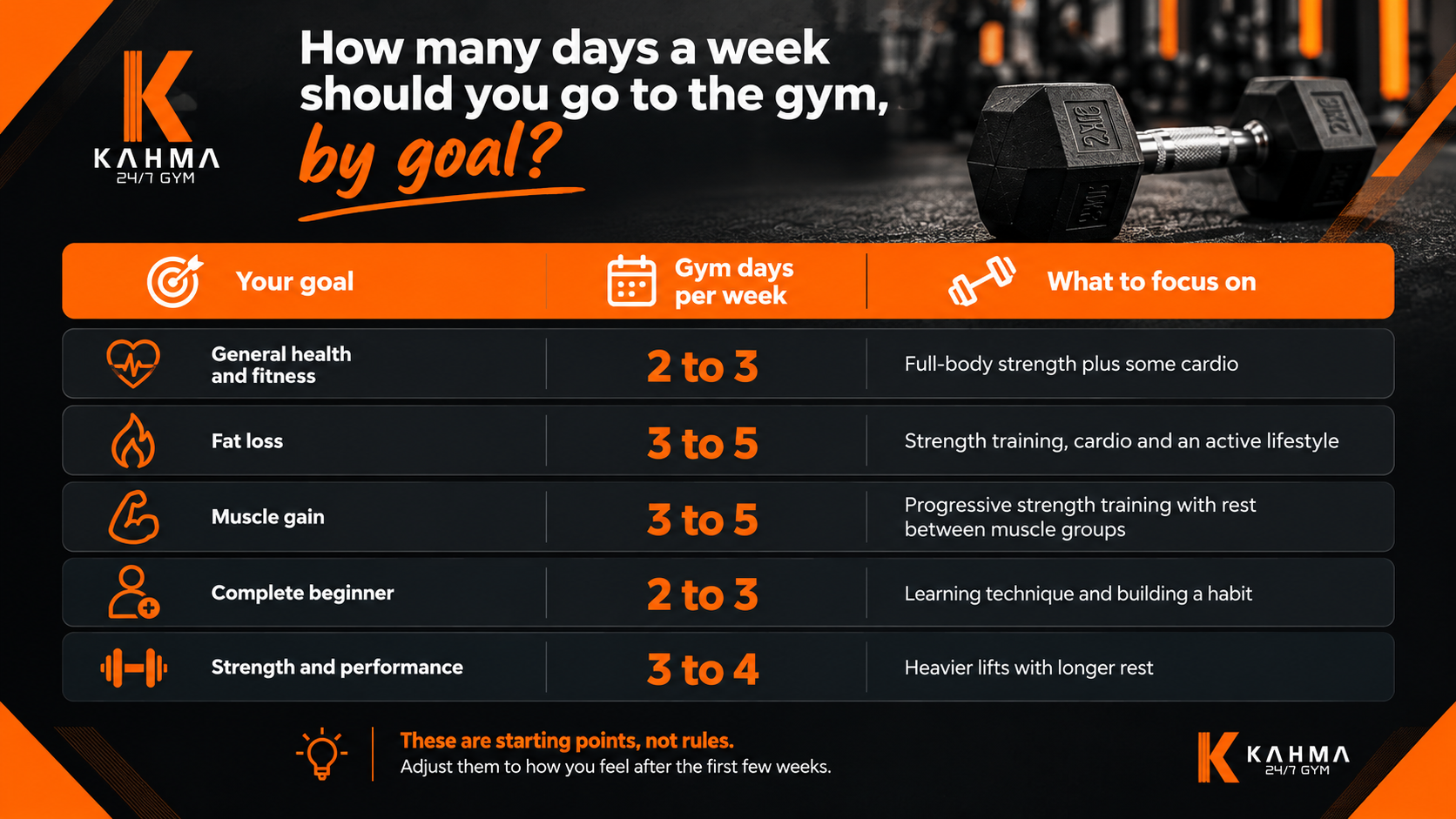
For general fitness: 2 to 3 days
If you want to feel stronger, move better and look after your health, two or three sessions a week is plenty. Try two strength sessions and one cardio or group fitness class.
For fat loss: 3 to 5 days
Fat loss comes from a mix of training, daily movement and food, not from gym days alone. Aim for three strength sessions, add one or two cardio sessions and keep walking on your other days. Read more in our post on what happens in your body when you burn fat.
For muscle gain: 3 to 5 days
Muscle grows when you train it, then rest. Three or four days a week works well for most people. If you train more often, split your sessions so you aren’t hitting the same muscles hard on back-to-back days. Check how long to rest between sets to keep each session effective.
For beginners: start with 2 to 3 days
If you’ve never lifted or you’re returning after a break, start small. Two or three full-body sessions with a rest day between them gives your body time to adapt. Our guide on what exercises to do on your first day at the gym shows you where to begin.
Sample weekly schedules
3 days a week (best for most people)
4 days a week
5 days a week
Always leave at least one full rest day in your week.
Most people do well with one to three rest days a week. Rest days aren’t wasted. They’re when your muscles repair and get stronger. On a rest day, try a walk, light stretching or an easy Pilates class.
For more on recovery, read the science of muscle recovery.
Too much:
Too little:
If you notice the first set of signs, add a rest day. If you notice the second, add a session or increase the challenge gradually.
The best schedule is the one you can keep. A 24/7 gym helps because you can train early, late or between shifts. If your week is packed, even a 45-minute workout three times a week works.
Some tips:
At Kahma 24/7 Gym Clyde North, you can train any time, with staffed hours Monday to Friday from 9:00 am to 8:30 pm, Saturday from 9:00 am to 3:00 pm, and Sunday from 11:00 am to 3:00 pm. If you’re unsure how to build your week, ask our team while they’re on site. You can also look at the membership options.
Is going to the gym 3 times a week enough?
Yes. For most people, three well-planned sessions a week are enough to build strength, improve fitness and see results over time.
Can I go to the gym every day?
You can, but most people don’t need to. If you train daily, vary the intensity and muscle groups, and include lighter days.
How many days a week should a beginner go to the gym?
Two to three days, with a rest day between sessions, is a good start.
How many days a week should I go to the gym to lose weight?
Three to five days works well when combined with daily movement and sensible eating.
How many days a week should I go to the gym to build muscle?
Three to five days, giving each muscle group time to recover between hard sessions.
What if I can only go twice a week?
Two sessions a week still improve your health and strength. Make each one count with full-body workouts.
Where can I get advice on a schedule?
Visit our FAQ page or get in touch through the contact page.
There’s no single perfect number of gym days. Start with a schedule you can keep, usually two to three days, and build from there as your fitness and confidence grow.
This article is general information, not medical advice. If you have an injury or a medical condition or you’re new to exercise after a long break, speak to a doctor or health professional first.


